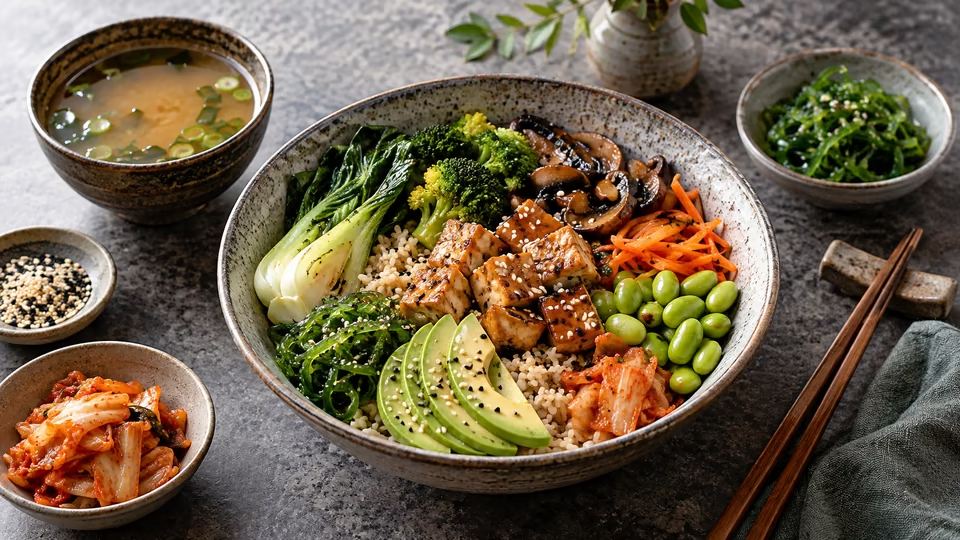


Consider the whole question
FAO and WHO's 2019 guiding principles bring together nutrition and health, environmental impacts, economic accessibility and social and cultural acceptability. They provide a framework for considering these dimensions together. The practical choices depend on the setting and the goals being pursued. Sustainable healthy diets: guiding principles.
Use that framework to define your question. A study of greenhouse gas emissions answers a narrower question than a study assessing whether a diet meets nutritional needs and is affordable. Both can be useful; their conclusions need to stay within what was actually examined.
Check the comparison before the conclusion
When reading a study or report, look for the following information:
| Part of the comparison | Questions to ask |
|---|---|
| The diets | Are these observed diets, modelled menus or proposed dietary changes? |
| Health and nutrition | Which nutrient criteria, food recommendations or health outcomes were included? |
| Environmental measures | Which impacts were counted, and which stages of the food system were covered? |
| Cost and access | Which prices and locations were used? Were preparation time or availability considered? |
| Local context | Whose food preferences, practices and constraints informed the comparison? |
These questions are a reading aid, not a scoring system. An omitted dimension may limit a conclusion without making the study useless. State the limitation clearly and look for complementary evidence.
Follow the method behind a food model
The UK Eatwell Guide publication page links both the model and reports explaining its development; it also describes an environmental assessment. The Swiss dietary recommendations connect dietary advice with health and sustainability. These are examples of national resources to examine, not a basis for assuming that one model transfers unchanged to every setting.
For a seminar, ask participants to identify where a resource addresses nutrition, where it addresses sustainability and where further methods information is needed. Keep the public advice separate from your interpretation of its supporting evidence.
Work through a proposed change
Imagine a research discussion about changing a weekly menu. Write down the proposed change before discussing whether it is “more sustainable”. Then list the outcomes you would need to assess: nutritional adequacy, the selected environmental measures, cost, availability and acceptability to the intended users.
Next, mark which of those outcomes the available study actually measures. A useful conclusion might be limited to one environmental outcome in one model. It should not expand silently into a claim that the menu is healthier, cheaper or suitable for everyone.
Use the FAO and WHO resource introduction to open the publication, or continue to food-based dietary guidelines for country examples.
Suggest a correction to this page